

At the core of scientific advancement, Materials Science unites theory, computation, and experimentation. It reveals how materials behave and how we can design them for energy, electronics, healthcare, and sustainable technologies. Its interdisciplinary nature drives discovery across physics, chemistry, and engineering, opening diverse career pathways in research, academia, and industry.
x
i
m
m
c


-
24 XX Str, ABCDEFG, IN 0000.
-
Mon - Sat(8.00 - 6.00) Sunday - Closed
Materials Science
Understanding, designing, and advancing materials from atoms to applications.
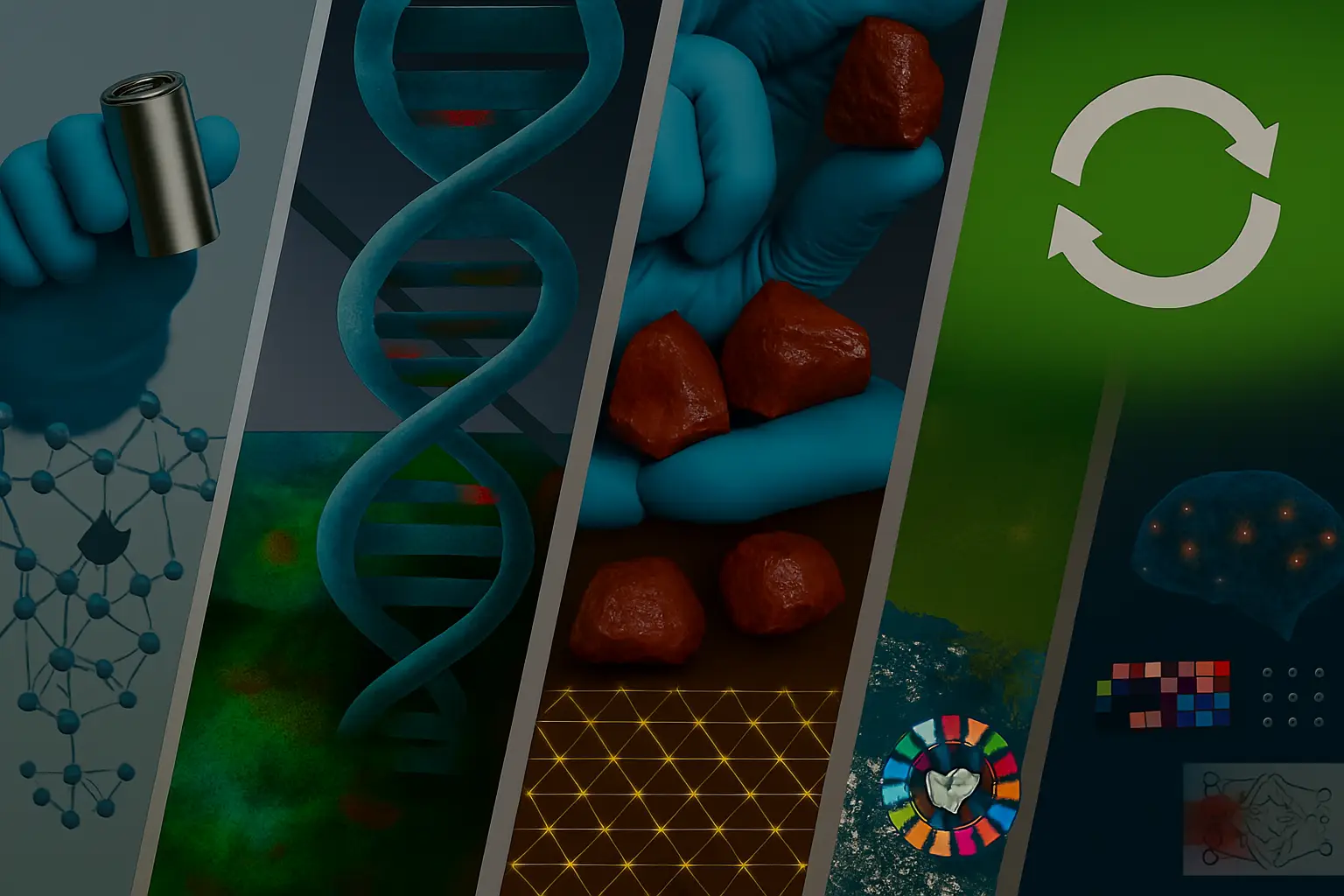
Core Areas
Building knowledge and skills for multiscale modeling and characterization
Materials Science Concepts
Understanding material behavior, structure, and properties across scales, forming the foundation for modeling and experimentation.
Modeling & Characterization
Practical techniques in computation and experimental methods to analyze and design materials effectively.

- Materials Structure & Properties
- Thermodynamics & Phase Behavior
- Materials Chemistry
- Computational Modeling
- Experimental Characterization
Learning Pathway
A structured path designed to develop expertise in modeling and analyzing materials across multiple scales, preparing students for advanced research and innovation.
01
Foundations
02
Characterization
03
Modeling
Future Prospects
Potential domains where your multiscale modeling and materials expertise can be applied, spanning industry and research
- Energy Materials
- Electronics & Semiconductors
- Healthcare & Biomaterials
- Aerospace & Automotive
- Computational & Data-Driven Research
- Academic & Research Careers
- Industrial R&D
Recent Cases

project v2
How to Navigate Challenge to Success

project v2
How to Navigate Challenge to Success
Goble to claims of duty or the obligations pleasures have ...

project v2
Clinical Trial Design Best Practices

project v2
Clinical Trial Design Best Practices
Hale to claims of duty or the obligations pleasures have ...